Home › Emergency
Emergency tree service in Greeley, CO
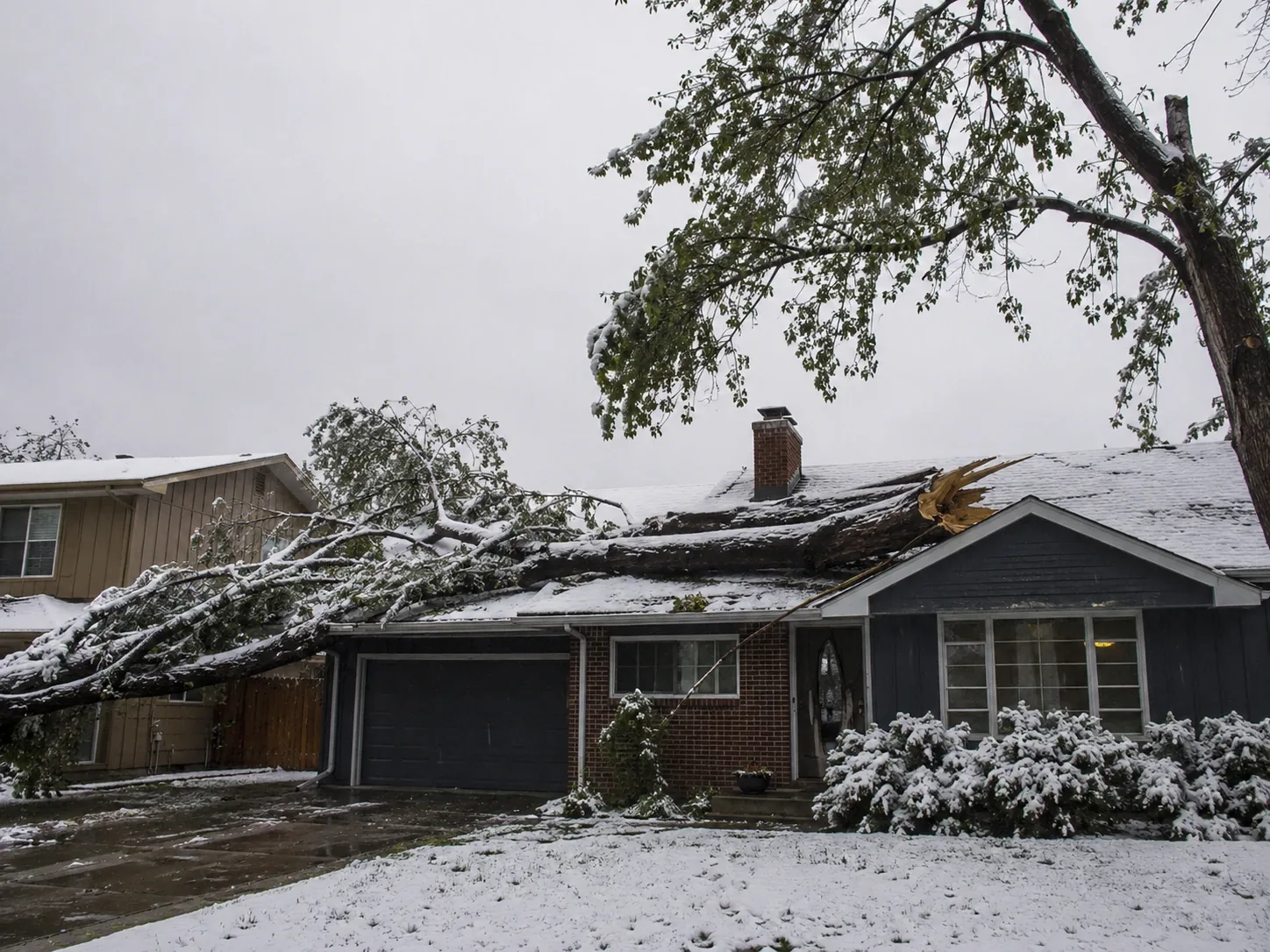
Trees on roofs, split trunks and limbs blocking access. Same-day response wherever we can get to you.
If a tree is touching a power line, stop and call Xcel Energy first. Very few tree services are authorised to work within 10 feet of energised lines, and a downed line can energise the ground and everything touching it. Keep people and pets well back and do not approach the tree.
What to do first
- Get everyone out of the affected rooms. A tree resting on a roof is still moving and still loading the structure.
- Stay away from lines. Assume any line on or near the tree is live.
- Photograph everything before anything is moved. Your insurer will want it, and once a crew starts cutting, the evidence is gone.
- Call your insurance carrier. Most homeowner policies cover removal when a tree damages a covered structure, and coverage terms differ on trees that simply fall in the yard.
- Then call. Phone rather than a form — after a wind event, a call gets through faster.
What counts as an emergency
Anything where waiting makes it worse or more dangerous: a tree or limb on a roof, a split trunk that has not finished failing, a limb hung up in the canopy above a walkway, a tree blocking a driveway or street, or a large tree that has begun to lean with visible soil heaving at the base.
Things that feel urgent but usually are not: a tree that has dropped a lot of small branches, a leaning tree that has leaned the same way for years, or storm debris on a lawn. Those get scheduled normally, which is cheaper for you.
When Greeley gets these calls
Two seasons account for most of our emergency work.
March through May. Heavy wet spring snow falls on trees that have already leafed out. The load is enormous, and silver maples, Siberian elms and Bradford pears split at weak unions. This is the single most destructive event type for Greeley's urban forest.
Chinook wind season. Downslope winds off the foothills regularly hit 60 to 80 mph in Weld County. Trees with dense, unthinned crowns and trees already weakened by ash borer are the ones that come down.
The second category is growing. Dead and dying ash across Greeley is far more brittle than live wood, and a stand of untreated ash is now the most reliable source of storm-damage calls in the city.
What happens on arrival
The first job is making the site safe: assessing what is still loaded and what could move, securing the area, and removing whatever is actively threatening people or the structure. Full cleanup and any remaining removal work can follow on a normal schedule once nothing is dangerous.
Ask for a written scope and photographs for your insurer. It makes claims go considerably faster.
Questions we get about this
How fast can you get here?
Same day wherever we can. After a major wind or snow event across Weld County the queue is triaged by danger, so trees on structures and blocked access come before yard debris.
Will my insurance cover this?
Most homeowner policies cover removal when a tree damages a covered structure such as a house, garage or fence. Trees that fall in open yard without hitting anything are often treated differently. Photograph everything before work starts and call your carrier early.
A limb is hanging in the tree but has not fallen. Is that urgent?
Yes, if it is over anywhere people walk or park. A hung-up limb, sometimes called a widowmaker, can release with no warning and no wind.
The tree is leaning after the storm. Should I worry?
A new lean with cracked or heaved soil at the base means the root plate is failing and the tree should be treated as unstable. A lean the tree has held for years with settled, undisturbed soil is usually not an emergency.
Do you work at night?
For genuine hazards where it is safe to do so. Aerial work in the dark carries its own risks, so sometimes the right answer is to secure the area and start at first light.